To Look Is Easy. To See Is Everything: Simona Ray on Presence and the Art of Attention
Discover the profound insights of Simona Ray on presence and the art of attention. Explore how Simona Ray redefines seeing beyond mere looking.
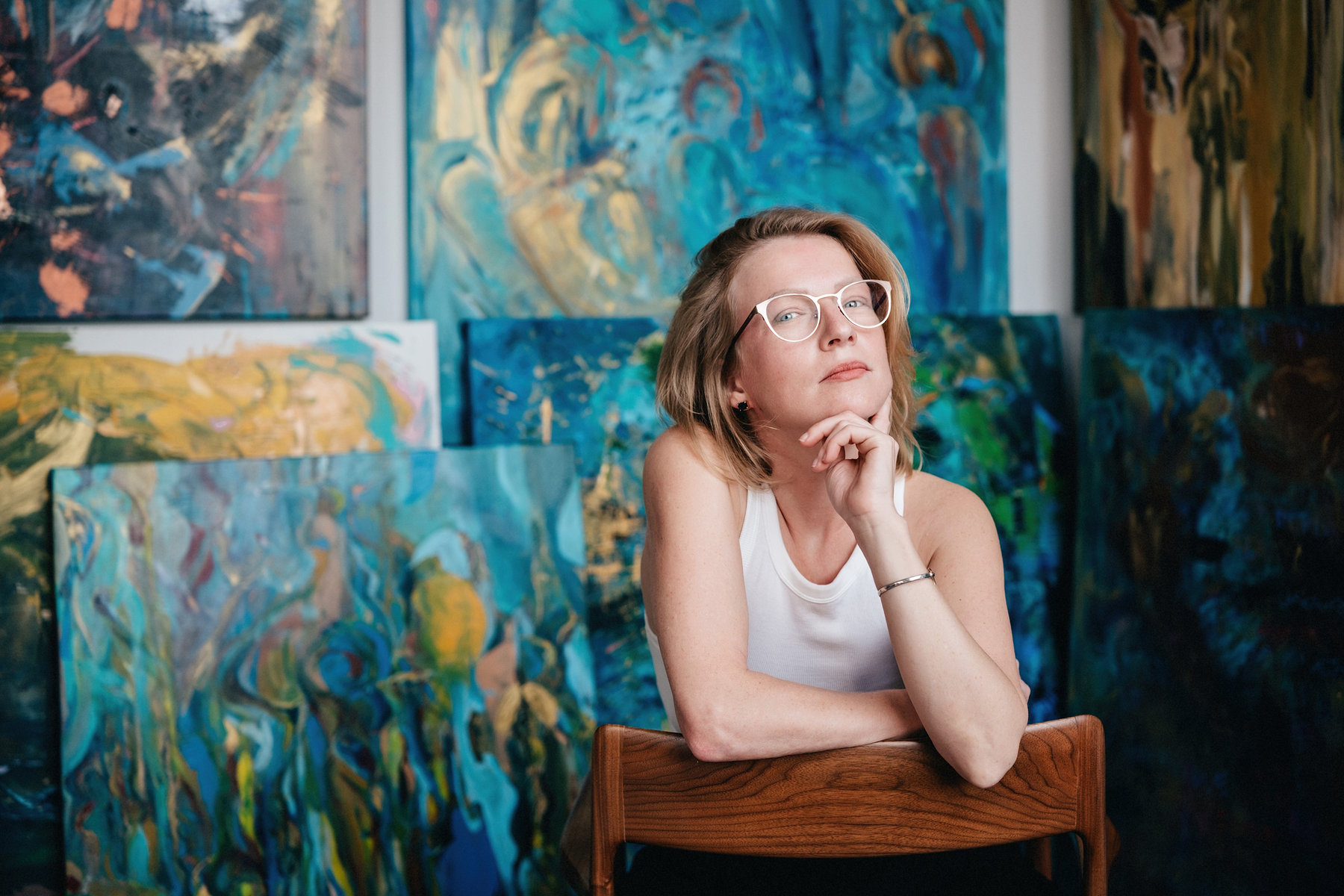
There is a difference between looking and actually seeing. Most people don’t realise how wide that gap is until something forces them to stop.
For Simona Ray, that gap is where everything begins. Not in the image itself, but in what happens between people. In the moment attention shifts from surface to something deeper. Something real.
This second conversation in the series moves away from myth and into something more immediate. Presence. Not as an idea, but as a practice. As something that demands your full attention in a world that is constantly pulling it elsewhere.
What comes through here is not theory. It is lived. From the stillness of her studio to the intensity of placing herself in the middle of Times Square, Ray is chasing something simple and difficult at the same time. What does it mean to truly see, and to be seen, without performance?
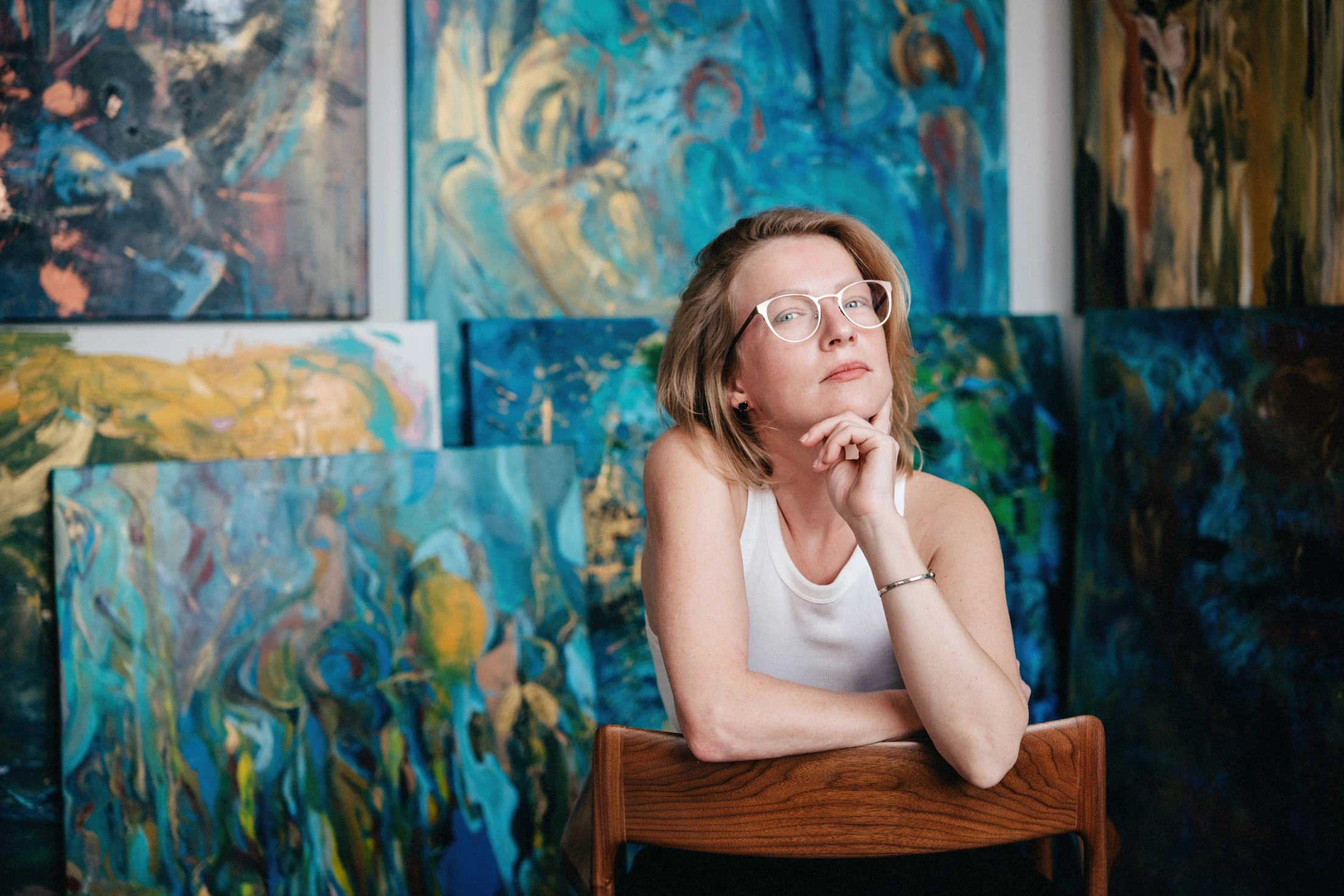
Your work often asks people to slow down and really look both at you and at themselves. When did you first realise that presence could be a powerful artistic act in its own right?
I have always been more interested in what happens in the space between people than in what happens on a surface. As a child, I carried a question I could not quite articulate: “Do you see the same colour I see?” It was not about colour. It was about whether we truly share the same inner world. That question never left me. And I think it is the origin of everything.
I live in Prague a city built on thresholds, on transformation, on the ancient idea that what is base can be transmuted into something essential. But two thinkers have been my true companions across the whole journey: Carl Jung and Albert Einstein. Einstein understood that we are, all of us, energy. That nothing is ever truly lost only transformed. And Jung understood the interior journey of that transformation: the descent into shadow, the confrontation with what we have been avoiding, the slow and necessary ascent toward becoming who we truly are. We all struggle. We all fall. We all rise. That arc is not a weakness it is the most human thing about us. It is what my two series map together. The Core Trilogy Journey of Acceptance traces the descent: the forgetting, the grief, the reckoning. The pentalogy Becoming One: Journey of Recognition maps the ascent across five thresholds: identity, desire, balance, choice, and joy. Together, they are one complete journey of Jungian individuation. The journey of seeing ourselves for who we truly are.
The precise moment I understood presence as artistic act was when I returned to painting after years away. I had been surviving. And when I came back, I did not return to technique. I returned to feeling. The blank canvas. The blank mind. Something arrived not a plan, but a state. The painting asked me to be entirely here. That is when I understood that truly attending to the canvas, to the colour, to the energy moving through the brush was itself a radical act in a world designed to scatter attention. If I could be present in the studio, I could invite the viewer into presence. And presence, I have come to believe, is the one thing most people are quietly starving for.
With SEE YOU, you placed yourself physically in one of the most overstimulating environments in the world. What did standing still in Times Square teach you about attention, distraction, and what people avoid seeing?
Times Square is the ultimate monument to looking without seeing. Every surface screams. Lights change every half-second. Thousands of bodies moving in every direction. The entire architecture of that place is designed to fragment attention to ensure you are always about to look at something other than what is in front of you. And so I placed myself inside it once every hour, for one minute, across twenty-four hours and held one question: Do we truly see each other, or do we only look?
Above me, on the towering digital billboards, my paintings were displayed. My goddesses, magnified to the scale of buildings, looking out over the same crowd I was standing in. And there I was, below them, in stillness. One minute. Then I left. Then I returned. The repetition was deliberate a ritual rather than a spectacle. Each return was a choice. Each minute of stillness was offered again, without demand, into one of the loudest environments on earth.
What I learned what the experience taught through my body, not through my mind is that people have perfected the art of protective non-seeing. They see shapes. They register presence. But to truly see someone to slow down and meet their eyes and acknowledge that a full human being stands before them requires something most people are not ready to offer. Because to truly see another person, you must briefly leave your own story. You must step out of the current of distraction and be present. And that costs something.
What people avoid seeing is not ugliness or difficulty. It is intimacy. The sudden weight of another person’s reality. The moment you recognise that the stranger before you has an entire inner world as complex as yours that can feel like too much to hold alongside everything else. So we look but we do not see. We move on. The stimulus continues.
And what I discovered is that the hunger for genuine presence is enormous. It lives just beneath the surface of all the performance and speed. The act was disarmingly simple no spectacle, no movement, no demand for attention. And yet that simplicity was the point. In a space built entirely on consumption and distraction, I offered stillness. And some people received it. That taught me something I have not been able to forget: it takes almost nothing to unlock genuine contact. Only the willingness to stop. To be still. To offer your full attention to what is actually in front of you.
You’re now developing the question: “Can I see myself? And can you see yourself?” When did this idea begin to form for you, and why does it feel urgent now?
This question arrived the way the best questions do not through thinking, but through living.
In my two Greek series the Core Trilogy Journey of Acceptance and the pentalogy Becoming One Journey of Recognition I mapped, without knowing it at the time, the complete Jungian process of individuation. The trilogy traces the descent: Lethe, Tyche, Ananke forgetting, grief, and the necessity that can no longer be silenced. The pentalogy traces the ascent through five goddesses, five thresholds of identity, desire, balance, choice, and joy. Together, across eight paintings, they form a complete map of what it means to see yourself truly see yourself through shadow and toward wholeness. I understood this only after both series were finished. The work knew before I did. And what it was ultimately tracing, in every canvas, was this: the journey of learning to look at yourself honestly. Not to judge. Not to manage. To see.
And I began to notice a pattern I had lived but not named. In the periods when I was most cut off from myself most buried under other people’s definitions of who I should be I was also least capable of genuinely seeing the people I loved. I could look at them. I could respond to them. But I could not truly see them, because I could not yet see myself. The capacity to be fully present for another person requires that you have some ground to stand on. Some relationship with your own inner life.
This is why the question feels urgent now. We live in an era of profound self-disconnection. People are performing their lives rather than living them. Curating images of who they should be rather than sitting with who they are. And from that disconnection, they reach toward each other and wonder why contact feels so thin, why they feel lonely in rooms full of people. I believe that the inability to see ourselves clearly is the root of much of the loneliness that defines our time. You cannot truly see another person from behind a mask. Not even if you want to.
SEE YOU, volume two, asks the question turned inward: Can I see myself? And can you see yourself? It is not a challenge. It is an invitation. To come closer to your own reality. Because everything else every genuine connection, every moment of being truly seen begins there.
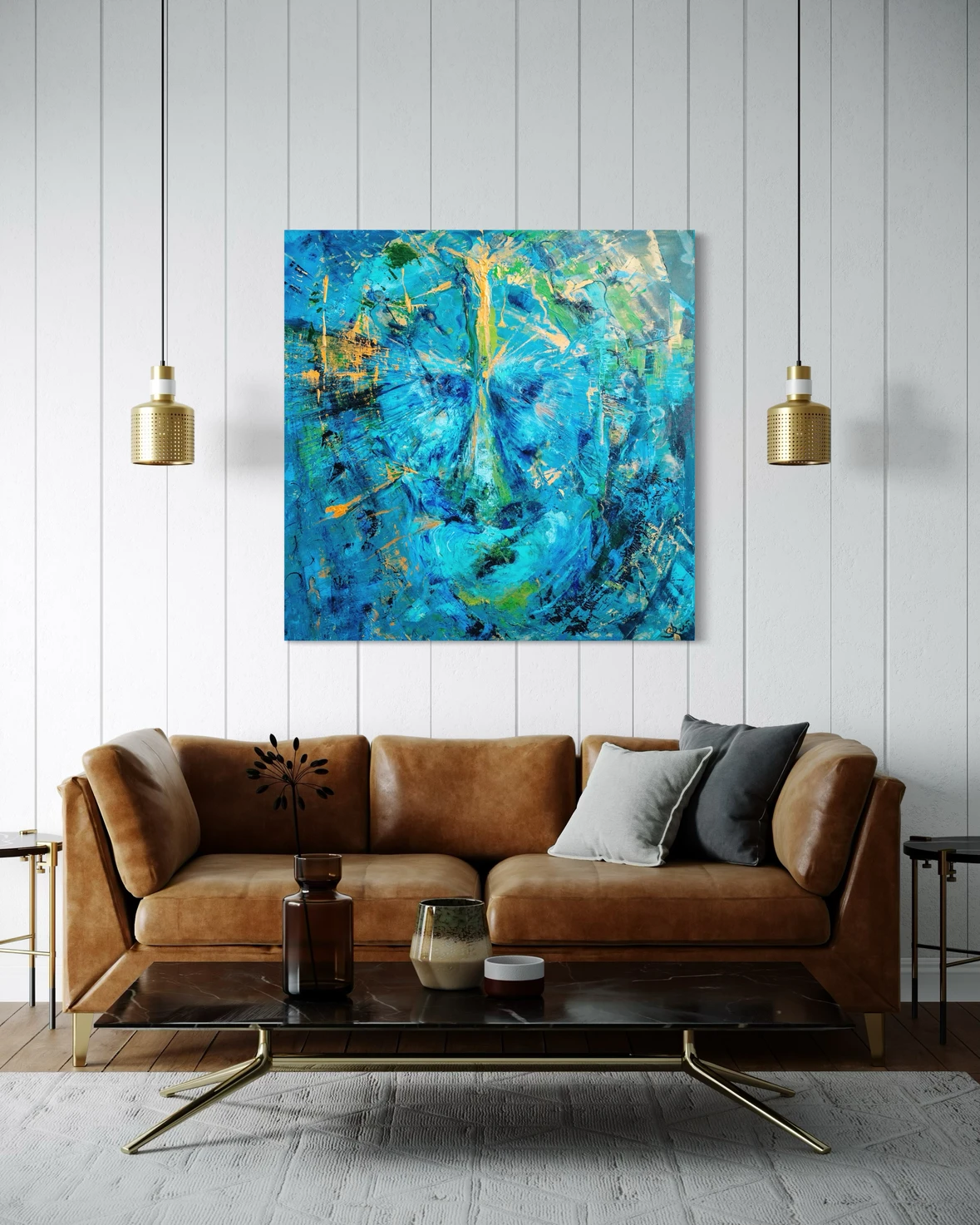
The new participatory element invites people to reveal something beautiful they overlook in themselves. What do you think stops people from recognising their own value in the first place?
Everything conspires against it. The messages are relentless: be more, achieve more, improve yourself toward some standard that is always slightly out of reach. From childhood, many of us learn that our value is conditional on performance, on approval, on not taking up too much space. And then we spend decades undoing that learning. Or not undoing it, and carrying it quietly as a voice that says: not enough.
In my commission work I encounter this directly. When I begin working with a subject, I am not listening for their achievements. I am listening for the thing they carry without knowing its name the strength so native to them, so woven into their cells, that they can no longer see it as remarkable. They see only the gap between who they are and who they imagine they should be. And I listen through that gap to what has always been there underneath it.
Euphrosyne the fifth goddess, the final painting of the pentalogy arrives as joy that survived sorrow. Her poem remembers: I once felt like less than ashes invisible dust. And she arrived here anyway. That is the movement I believe we are all capable of. But you cannot begin it if you cannot see what you already carry.
What stops people, I think, is a kind of learned blindness toward the self. We are trained to see our deficits with precise detail and our gifts with deep suspicion. Claiming your own value feels uncomfortably close to arrogance. Seeing yourself clearly truly seeing, without the reflexive correction of self-criticism requires a courage that no one tells us to practice.
And perhaps above all: we have not been given permission to fall. To fail. To not yet be finished. My Core Trilogy Journey of Acceptance is built entirely on this one permission. Its three paintings trace the descent: the mercy of forgetting, the grief of realising what was missed, the moment truth arrives and will not leave. That trilogy is included in 100 Artists of Europe, publishing this April and for me, that recognition carries particular meaning. Not because of the honour, but because of what it says about the journey those paintings document. That it is enough to trace the falling honestly. That art which tells the truth about going down is as worthy as art that celebrates the rising.
This is what the participatory element of SEE YOU, volume two, reaches toward. A simple, gentle invitation: what is beautiful in you that you have been looking past? The falling was never the end of the story. It was always the beginning.
As an artist who works so intuitively, how do you personally practise presence in your everyday life, especially when doubt, pressure, or expectation enter the process?
I want to be honest here, because I think artists sometimes speak about presence as if we have solved it as if our practice exempts us from the ordinary work of being human. It does not. Doubt enters. Pressure enters. Expectation particularly now, with the Paris exhibition behind me and the second SEE YOU approaching in August enters loudly.
What I have learned is that presence is not a state you achieve and then maintain. It is something you return to, again and again. Like breath. You notice you have left, and you come back.
For me the return happens through the body first. When I notice I have moved into performance mode thinking about how the work will be received, whether it is enough I come back to the physical act. I pick up the brush. I find a sponge. I let the colour lead. The thinking mind cannot follow where the body and material go, and so it gradually quiets.
The poems help too. When a poem arrives and it always arrives unexpectedly, fully formed, often mid-painting I stop everything and write it down immediately. That act of dropping what I am doing to receive what is arriving is itself a practice of presence. It teaches me that the work does not belong to my planning. It belongs to the listening.
I also work with a Jungian life coach. The slow, careful work of seeing yourself honestly removing the layers that are not truly you that is the foundation everything else is built on. You cannot be truly present in the studio if you are not present in your own life. And Prague helps. A city that has been a threshold for centuries. You cannot walk across the Vltava at dusk and stay entirely inside your own anxieties. The city itself asks you to arrive.
In a culture built around constant visibility and performance, do you think being truly seen has become more difficult than ever, even when we are technically “visible” all the time?
Infinitely more difficult. And the reason is paradoxical: the more visible we become, the more carefully we manage what is visible. Social media has given every person a gallery. But what most people hang in that gallery is not themselves it is the version of themselves they hope to be, or that they believe others want to see. Curated. Corrected. Filtered. Not presence, but performance.
True visibility is not the same as being watched. You can have ten thousand people looking at you and feel completely unseen. And you can stand in a room with one person who is truly present, and feel sometimes for the first time in your life that you are real.
The problem with constant visibility is that it trains us toward the surface. We become skilled at producing images and very unskilled at sitting with the unresolved, the unfinished, the parts of ourselves that do not photograph well. And when we cannot sit with those parts in ourselves, we certainly cannot offer presence to them in another person. We flinch. We move on. We double-tap the beautiful version and scroll past the truth.
What I tried to do in Times Square and what I will try to do again in August is to introduce a different kind of visibility. Not the kind that demands admiration or engagement. Just presence. A body in space, still, attending. The response has taught me that people can receive it and that they are hungry for it in a way they do not always know how to name.
When people engage with your work through a performance, a painting, or a commission what kind of emotional response matters most to you: recognition, discomfort, healing, or something else entirely?
Recognition. Always, and before anything else.
Not because discomfort or healing are less valuable they are not but because recognition is the gate through which everything else must pass. The moment when someone stands before a painting and feels: that is me not my story, but my state is the moment the work becomes real. It stops being paint and becomes a mirror.
And the recognition I reach for is not comfortable. It is the recognition of something the viewer has been carrying but not quite allowed to look at directly. When someone says: I don’t know why, but I feel I have been seen by this painting what they are experiencing, I believe, is the recognition of a part of themselves they have kept in peripheral vision. Not quite named. Not quite claimed.
That is what myth gives us, and what paint gives us: the capacity to carry something true into visibility without naming it so precisely that it loses its aliveness. Lethe is not the clinical term for dissociation. She is the state of it the texture of it, the particular grace of it. And when someone stands before her and feels known, that is not discomfort or healing as separate events. It is recognition that contains both, simultaneously. You feel seen and it costs you something. That cost is real. That cost is what makes the encounter matter.
With my commission work this is even more precise. The moment a client sees the finished painting and says: how did you know? that is the moment that sustains everything. I did not know through information. I knew through listening. Through the same capacity for presence that the paintings ask of their viewers. The work is always a dialogue between what I heard and what they, perhaps for the first time, are ready to see in themselves.
With this new evolution of SEE YOU and August ahead, what do you hope people will carry with them after encountering this work, long after they’ve left Times Square?
A question. I want them to carry a question, not an answer.
The question of Times Square, volume one, was outward: do we truly see each other, or do we only look? People left with that question aimed at the world around them. At the faces on the subway. At the person across the dinner table. It invited them to look differently at what was outside.
The question of volume two is the same question turned inward: Can I see myself? Can you see yourself? I want people to carry that inward gaze with them. Not as a burden or a project or another item of self-improvement. But as a genuine curiosity. As an opening.
What is there in me that I have been looking past? What strength, what beauty, what truth about my own nature have I been too busy too defended, too frightened, too formed by other people’s stories about me to acknowledge? These are not small questions. They are, I believe, the beginning of everything. Of genuine connection. Of creative life. Of what Jungian psychology calls individuation the process of becoming truly yourself rather than a collection of adaptations.
I also hope they carry the knowledge that they are not alone in the difficulty of seeing. That the hunger for genuine recognition is universal. That being seen truly, without the filter of performance or expectation is something every human being needs and far too few receive. And that this need is not weakness. It is one of the most human things about us.
Euphrosyne my final goddess, the close of the entire arc exists as proof that joy is possible after the full descent. That you can pass through forgetting and grief and reckoning and the painstaking rebuilding of identity, and arrive somewhere that is not simply relief but genuine lightness. That is what I want people to carry from Times Square in August. Not just the question, but the sense that answering it or living with it honestly leads somewhere worth going.
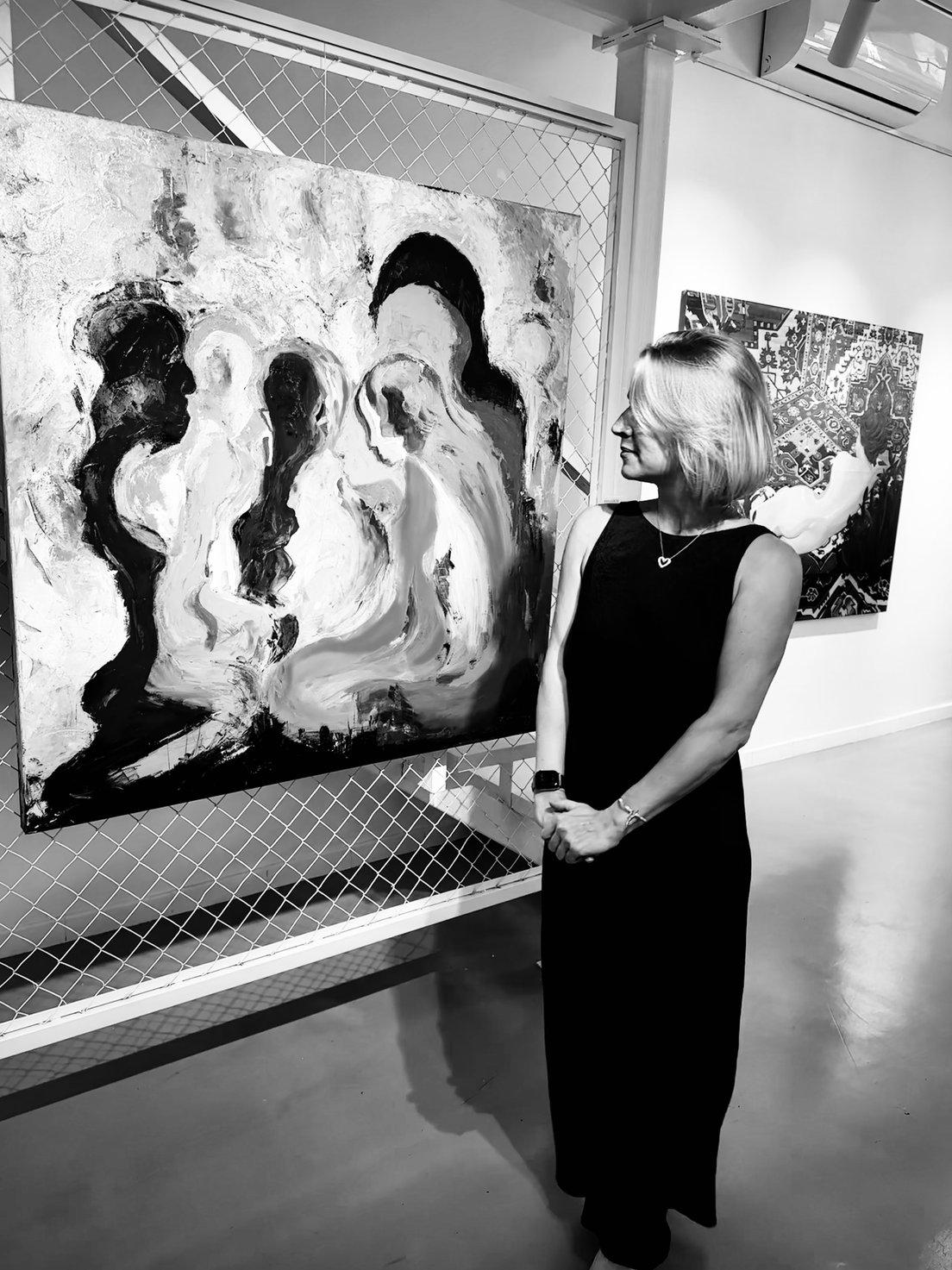
What becomes clear in this conversation is that presence is not passive. It is a choice. And not always an easy one.
To truly see another person requires something most people have trained themselves to avoid. You have to slow down. You have to step out of your own momentum. You have to allow someone else’s reality to exist alongside your own without trying to control it or move past it.
And before any of that, you have to be willing to look at yourself.
That is where the conversation turns. Away from the external and inward. Because the truth underneath it all is simple. If you cannot see yourself clearly, you will always struggle to see anyone else.
In a world built on visibility, where everyone is constantly presenting some version of themselves, real presence has become rare. And because it is rare, it carries weight. It stays with you.
What Simona Ray is doing, whether through painting, performance, or the quiet act of listening, is creating moments where that kind of seeing becomes possible again. Not forced. Not explained. Just offered.
And maybe that is why it lands. Because it asks very little on the surface. Just that you stop for a moment.
And actually look.
Continue Reading
More In Conversation With
Dr. Sima on Reclaiming the Female Body and Why Silence Was Never Neutral
Dr. Sima on Why Intimate Wellness Is Beauty’s Most Overlooked Frontier
Do You See the Same Colour I See? Simona Ray on Portraiture, Presence, and the Art of Truly Seeing
Before the Mind Steps In: Simona Ray on Intuition, Instinct, and Letting the Work Arrive

Stories worth your
weekend.
A handpicked dispatch from Hinton's editors. The long reads, the people, the openings, the things worth knowing. No filler.