Jade Sammour on Reinvention, Memory and the Things We Choose to Hold Onto
Jade Sammour, founder of Dainty London, on leaving her NHS role as a Children's Heart Transplant Nurse to build a sustainable jewellery brand rooted in care.
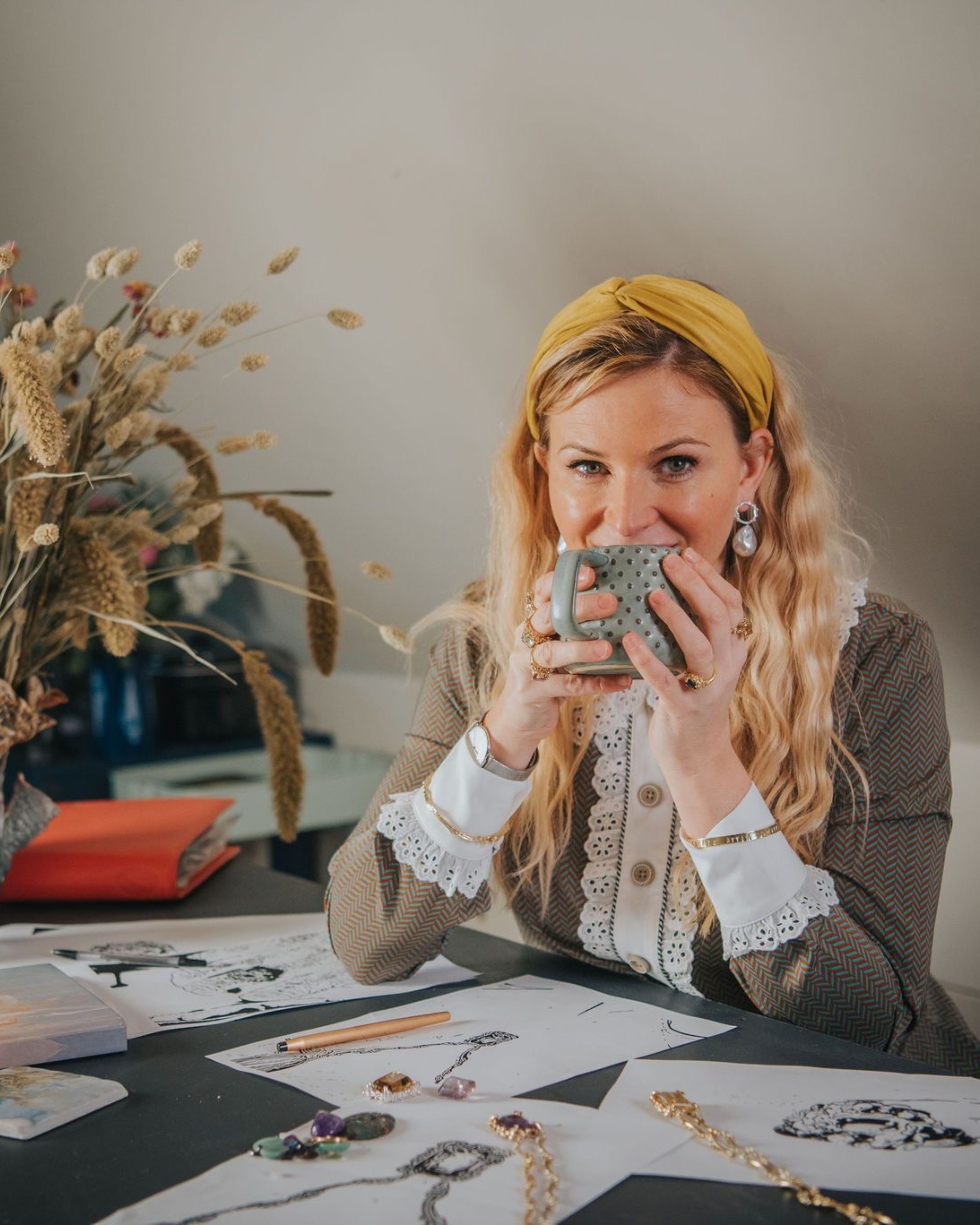
Jade Sammour
Jade Sammour on Reinvention, Memory and the Things We Choose to Hold Onto Intro
There is a particular kind of confidence that comes from having already lived through something bigger than business. Speaking with Jade Sammour, founder of Dainty London, you sense it almost immediately. Not the polished confidence of someone trained to sell a brand, but the steadier kind that comes from perspective.
Before building one of Britain’s most recognised independent sustainable jewellery houses, Sammour worked as a Children’s Heart Transplant Nurse Specialist. It is the sort of role that changes your understanding of people permanently. The stakes are absolute. The emotions are raw. And yet, listening to her speak now about jewellery, memory, craftsmanship and permanence, it becomes clear that the distance between those two worlds is not as wide as it first appears.
What emerges throughout this conversation is not simply the story of a founder, but of someone learning to give different parts of herself permission to exist. Cornwall, where she grew up surrounded by the sea and her father’s fishing life, still runs through her language and design instinct. Nursing still shapes the way she thinks about care, trust and responsibility. Even her approach to sustainability feels less like branding and more like personal conviction formed long before the industry made it fashionable.
There is also an honesty to Sammour that feels increasingly rare. She speaks openly about loneliness, self doubt and the strange emotional silence that can sit behind success. She talks about the pressure of building something alone and the challenge of protecting the original meaning of a brand once the world starts paying attention to it.
This is ultimately a conversation about far more than jewellery. It is about identity, reinvention and the quiet courage required to become more fully yourself, even when the path there makes very little sense on paper.
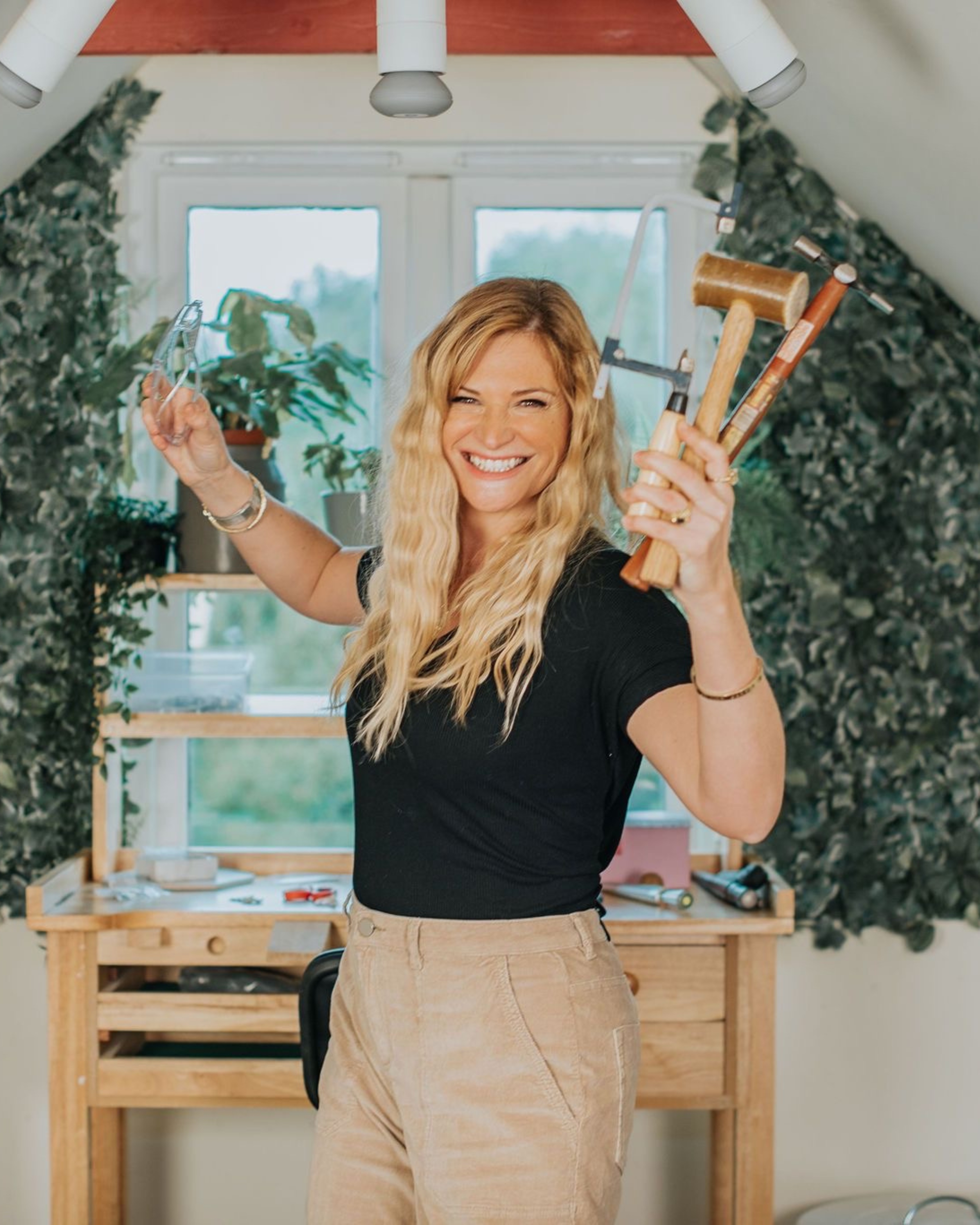
You have sat with families at the most fragile points of their lives. When you think about the work you do now, creating objects that are kept and passed on, do you ever feel like you are still working with that same idea of holding onto something that matters? When I was a nurse, particularly working with children going through heart transplants, you are very quickly reminded of what actually matters. Families would come in carrying so much - fear, love, hope - and you learn to hold space for all of it. You learn that the smallest gestures of comfort can mean everything. I didn't leave nursing thinking I was going to carry that into jewellery. I just started making things, really. But when I look back now, I think there is something deeply connected in it. A piece of jewellery that someone keeps, that gets passed to a daughter or worn on a wedding day - it holds a feeling. It holds a moment that mattered.
I'm not comparing what I do now to the profound weight of what nurses carry every day - I want to be clear about that. The people still doing that work are extraordinary. But I do think my time in the NHS gave me a deep respect for the things that endure. For the things worth holding onto. If someone wears a piece from Dainty London and it becomes part of their story - part of something they cherish - then I think that's more than enough. That genuinely means the world to me.
Leaving a role like yours in the NHS is not just a career decision, it is an identity shift. What did you have to unlearn about yourself in order to step fully into building something of your own? I think the biggest thing I had to unlearn was the idea that my worth was tied to how much I was sacrificing. In nursing, you are conditioned - quite beautifully, in many ways - to put everyone else first. Your needs come last. Ambition for yourself almost feels indulgent, even selfish. And I carried that with me for longer than I'd like to admit. When I started Dainty London, there was this quiet voice that kept asking - who are you to want more than this? Who are you to build something for yourself? And I had to gently, persistently talk back to that voice. Because wanting to create something, wanting to grow something of your own, doesn't make you less caring. It just makes you human. I also had to unlearn the need for certainty. Nursing is a discipline of protocols and precision - and rightly so, lives depend on it. But building a business asks you to make decisions with incomplete information, to trust your instincts, to be comfortable not knowing exactly what comes next. That was deeply uncomfortable for me at first. And I think, honestly, I had to unlearn the habit of minimising myself. Nurses are brilliant at deflecting praise - "oh, I'm just doing my job." But as a founder, you have to learn to stand in your story. To say, yes, I built this, and I'm proud of it. That took time. It still takes effort, if I'm being truthful. I'm still learning, really. But I think that's the point.
There is a level of permanence in what you create. These are pieces meant to outlive moments, sometimes even the people who wear them. When did that sense of responsibility first become real to you? I think it became real to me the first time a customer told me she was buying a piece for her daughter. Not as a gift to give right away - but to put away. To keep until the right moment. And I remember thinking, this little thing I made with my hands is going to sit in a box, wrapped carefully, waiting for a day I'll never witness. That stayed with me.
But if I'm being completely honest, the deeper weight of it probably traces back to the ward. When you work with families navigating something as serious as a child needing a heart transplant, you are surrounded by people who are acutely aware of what time means. Of what lasts. You see people holding onto photographs, onto letters, onto the smallest objects - because those things become anchors. Proof that love was here. I didn't make that connection consciously when I started designing jewellery. I just knew I wanted to make things that felt worthy of being kept. But somewhere along the way I realised that the responsibility I felt in nursing - to show up fully, to do the thing properly, to understand that it genuinely matters - had simply moved with me. Now when I sit with a customer who is commissioning a bespoke piece, perhaps for an engagement or a milestone, I feel that same quiet seriousness. This isn't decoration. This is something they will reach for on the most significant days of their lives. That doesn't frighten me - it steadies me. It reminds me why the design has to be right, every single time. I never take that lightly. I don't think I ever could.
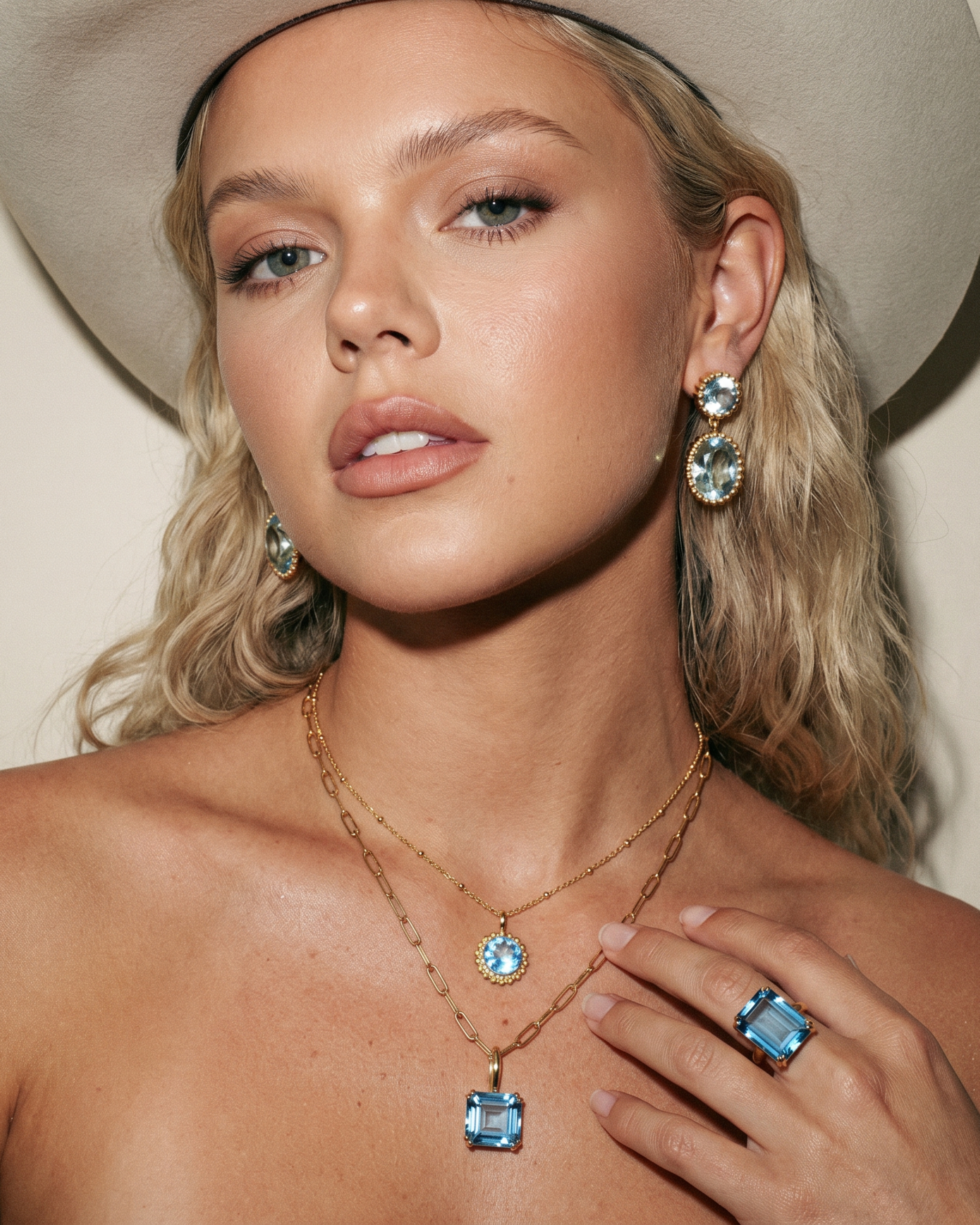
You grew up around the sea, where nothing ever really stays still. Yet your work is about creating something lasting. Do you think that contrast is where your design instinct comes from? Growing up in Cornwall, the sea was just always there. It wasn't romantic to us, not in the way visitors see it. It was ordinary and wild and constantly changing. My dad would go out fishing, and the water would look completely different coming back than it did going out. You learn very early that nothing holds its shape for long. Tides come in, things shift, the horizon is always moving. And yet - and I think this is the part that quietly shaped me - the sea also leaves things behind. Worn pebbles, sea glass, shells with their edges softened by years of movement. Things that have been through so much and come out the other side more beautiful for it. Permanent in their own quiet way. I think that's what I'm always chasing in a design. That feeling of something that has been through the world and settled into itself. Unhurried. Refined by time rather than in spite of it. There's also something about living beside something so much bigger than yourself that keeps you humble. The sea doesn't care for trends. It doesn't perform. It just is. And I think that's informed how I approach the work - I'm not interested in what's fashionable right now. I'm interested in what will still feel right in thirty years, on someone's daughter, in a different life entirely.
So yes - I think that contrast is absolutely where it comes from. The restlessness taught me to appreciate stillness. The impermanence taught me to love what lasts.
In nursing, everything is about precision because the stakes are absolute. In jewellery, the stakes are different, but your attention to detail feels just as exact. Do you approach your craft with the same mindset, or has it changed in a way you did not expect? The precision, yes - that has absolutely carried over. I don't think I know how to do something halfway. Whether it was checking a medication dosage at two in the morning or sitting with a setting until the stone sits exactly as it should, there is something in me that simply cannot let a detail go unresolved. I'm not sure that ever changes, regardless of the field. But what has surprised me is what the stakes actually feel like in this work compared to nursing.
In the NHS, the stakes were urgent and visible. You always knew when something mattered because there was an immediacy to it. The pressure was external, constant, and very clearly defined. You either got it right or you didn't, and you knew almost immediately. In jewellery, the stakes are quieter. More invisible, in a way. No one is watching over your shoulder. There's no protocol to fall back on. And yet the responsibility sits just as heavily - it just sits differently. It's slower. More personal. A mistake in a bespoke commission isn't a clinical error, but it is a failure of trust. Someone came to me with something meaningful - an anniversary, a memory, a person they love - and they placed that in my hands. That is not nothing.
What I didn't expect was how much more vulnerable this precision would make me feel. In nursing, the exactness protected you in a way - you followed the process, you documented everything, you worked within a structure. Here, the decisions are entirely mine. The eye, the judgment, the choice of proportion or weight or finish - all of it comes back to me. And I think that exposure, that lack of a safety net, has actually made me more exacting, not less. Because when it's entirely yours, you hold it to a higher standard. So the mindset is the same. But the feeling of it - that's changed more than I ever expected.

There is a lot of conversation around sustainability, but very little of it feels lived in. For you, where does that commitment actually come from, beyond the expectations of the industry? Honestly, it comes from having grown up somewhere that taught me the sea is not a backdrop. It's a living thing. In Cornwall, you don't have an abstract relationship with the natural world. It's the view from your kitchen window, it's where your dad goes to work, it's the smell of the air and the sound you fall asleep to. When you grow up that close to something, you develop a loyalty to it that isn't really a choice. It's just part of how you're built. So when I started making jewellery and realised how extractive the traditional supply chain can be - the environmental cost of mining, the ethics of how materials are sourced - I didn't need the industry to tell me that wasn't acceptable. I already knew it in a much older, quieter part of myself. I think that's the difference between sustainability as a marketing position and sustainability as a genuine constraint you place on yourself. For me it was never - how do we communicate this? It was - I cannot make something beautiful from something harmful. That contradiction doesn't work for me. My nursing background plays into it as well, though perhaps less obviously. When you spend years working within a system that is fundamentally about preserving life, you develop a very low tolerance for unnecessary harm. You start to see it everywhere. And once you see it, you can't really unsee it. Recycled metals, ethical stones, considered production - these aren't features I added to Dainty London to appeal to a conscious consumer. They were the only way I could build something I actually believed in. The business grew around those values, not the other way around. I think people can feel the difference, even if they can't always name it. And I think that's why it resonates when it does.
Building something alone can be isolating, even when it looks successful from the outside. What has been the hardest part of this journey that no one really sees? I'm glad you asked this, because it's the question that most founders quietly hope someone will ask and simultaneously dread answering.
The hardest part, genuinely, is the silence between the highlights. The bit that doesn't make it into the press features or the award ceremonies. It's a Tuesday afternoon and you've packed orders alone, answered every email, dealt with a supplier issue, managed the accounts, created content, and by the time the evening comes there is no one to debrief with. No colleague to say - that was a hard day, wasn't it. You just close the laptop and start again tomorrow. I don't say that for sympathy. I chose this, and I would choose it again. But I think the loneliness of it is something that genuinely surprised me, and I don't think it's spoken about honestly enough. There's also a particular kind of exhaustion that comes from being everything at once. In nursing there was a team. There was a structure that held you even on the worst days. When you build alone, you are the structure. And on the days when you're depleted - when self-doubt creeps in or something doesn't land the way you hoped - there is no structure to hold you up except the one you build inside yourself. And building that has been the quietest, most unglamorous work of this entire journey. I think the other thing people don't see is the grief of milestones. You work toward something for months, sometimes years, and when it arrives - an award, a feature, a collection launch - there is this strange flatness that can follow. Not ingratitude. Just the realisation that there's no one sitting across from you to truly mark the moment with. And you're already moving on to the next thing before you've really let the last one settle. What has helped is being honest about it. With myself, with the people closest to me. And finding community where I can - other founders, other women building things - because there is something quietly sustaining about being in a room with people who simply understand without needing it explained.
But I won't pretend it isn't hard. It is. And I think saying so is more useful than pretending otherwise.
You have built a brand that sits between two very different worlds, something deeply personal and something commercially visible. Have you ever felt a tension between protecting what it means to you and allowing it to grow? Every single day. And I think anyone who says they haven't felt that tension probably hasn't built something they truly care about. When Dainty London started, it was almost entirely instinctive. The designs came from places inside me that I hadn't even fully articulated yet - Cornwall, my dad, the water, the feeling of things worn smooth by time. There were no spreadsheets involved in that. No strategy. It was just me making things that felt true. And then it begins to grow. People start to respond. Opportunities appear. And with them comes this quiet pressure - sometimes external, sometimes entirely self-generated - to be more legible. More scalable. More of what the market seems to want. And you have to make a choice, over and over again, about how much of yourself you're willing to translate and how much you simply won't negotiate on. I have felt that tension acutely. There have been moments where a direction felt commercially sensible and creatively hollow, and I've had to sit very still with that discomfort and ask myself - if I do this, will I still recognise what I've built in five years? Sometimes the answer has surprised me. What I've come to understand is that the personal and the commercial don't have to be in opposition - but keeping them aligned requires constant, deliberate attention. The moment you stop asking why you started, the drift begins. And drift is quiet. You don't notice it until you're quite far from where you meant to be. I think the Cornish part of me - the part that grew up watching something vast and indifferent and magnificent - keeps me honest in that way. The sea doesn't compromise its nature to be more appealing. It just is what it is, and people are drawn to it for exactly that reason. I try to hold Dainty London to that same standard. Not rigidly - I want it to grow, genuinely - but always from the inside out. From the thing that is real, not from the thing that is convenient. That feels like the only version of growth worth having.
When people wear your work on days that matter to them, weddings, milestones, moments they will never forget, how aware are you of being part of something you will never fully witness? Deeply aware. And I think that awareness is one of the most quietly profound parts of this work. There is a piece of mine out there right now on someone's wedding day. There is one being worn to a funeral, held together by grief and love in equal measure. There is one being unwrapped by a daughter who doesn't yet understand what it will come to mean to her. And I will never see any of it. I will never know the room, the light, the faces, the feeling in the air when that moment happened. And somehow that doesn't sadden me. It actually feels right.
I think in nursing I learned that the most meaningful things you do are often the ones you never fully witness the outcome of. You care for someone at their most vulnerable and then they go home, back into a life you'll never be part of. The work happens in the in-between. In the moment of contact, not the conclusion. Making jewellery feels similar. My part is the making. The meaning gets added by the person who wears it, in rooms I'll never enter, on days I'll never know. And there is something genuinely beautiful about that kind of trust - the trust that what you've made is worthy of those moments even in your absence.
What does move me, more than I can always articulate, is when someone reaches back. When a customer writes to tell me they wore a piece on their wedding day, or that their mother asks about it every time she visits, or that they've ordered one for a friend going through something difficult. Those moments close a loop I didn't even know was open. And I hold them very carefully. But mostly I try to make peace with not knowing. To trust that the work carries something of its own once it leaves my hands. That whatever intention went into the making travels with it somehow. I suppose that's all any of us can really hope for - that the things we put into the world with care find their way to the moments that need them.
If you strip everything back, the recognition, the growth, the momentum, what is the one thing you are trying to build that has nothing to do with business? Proof that a life can hold more than one version of itself. I think that's really what it comes down to, when I'm being completely honest with myself. I spent years as a nurse and I was proud of that. Deeply proud. It was not a stepping stone to something else - it was a full and meaningful chapter. But there was always something else quietly living alongside it. A creative restlessness I didn't quite have the language for, or the permission to take seriously. And I think what I am really building underneath all of it - is evidence that you don't have to choose one thing and let the rest of yourself go quiet. That the woman who sat with families on the hardest nights of their lives and the woman who designs jewellery inspired by coastal light and her father's fishing boats are not two different people. They are the same person, just given different rooms to exist in. I want my children to see that. That's probably the most honest answer I can give you. I want them to watch their mother and understand that reinvention is not failure. That following something true about yourself - even when it's inconvenient, even when it doesn't make sense to anyone else - is not a luxury reserved for other people. It's available to them too. I didn't come from a world where that felt obvious. I had to find my way to it slowly, and sometimes painfully. So, if Dainty London stands for anything beyond the jewellery itself, I hope it stands for that. For the quiet courage of becoming more fully yourself, even when the path isn't clear.
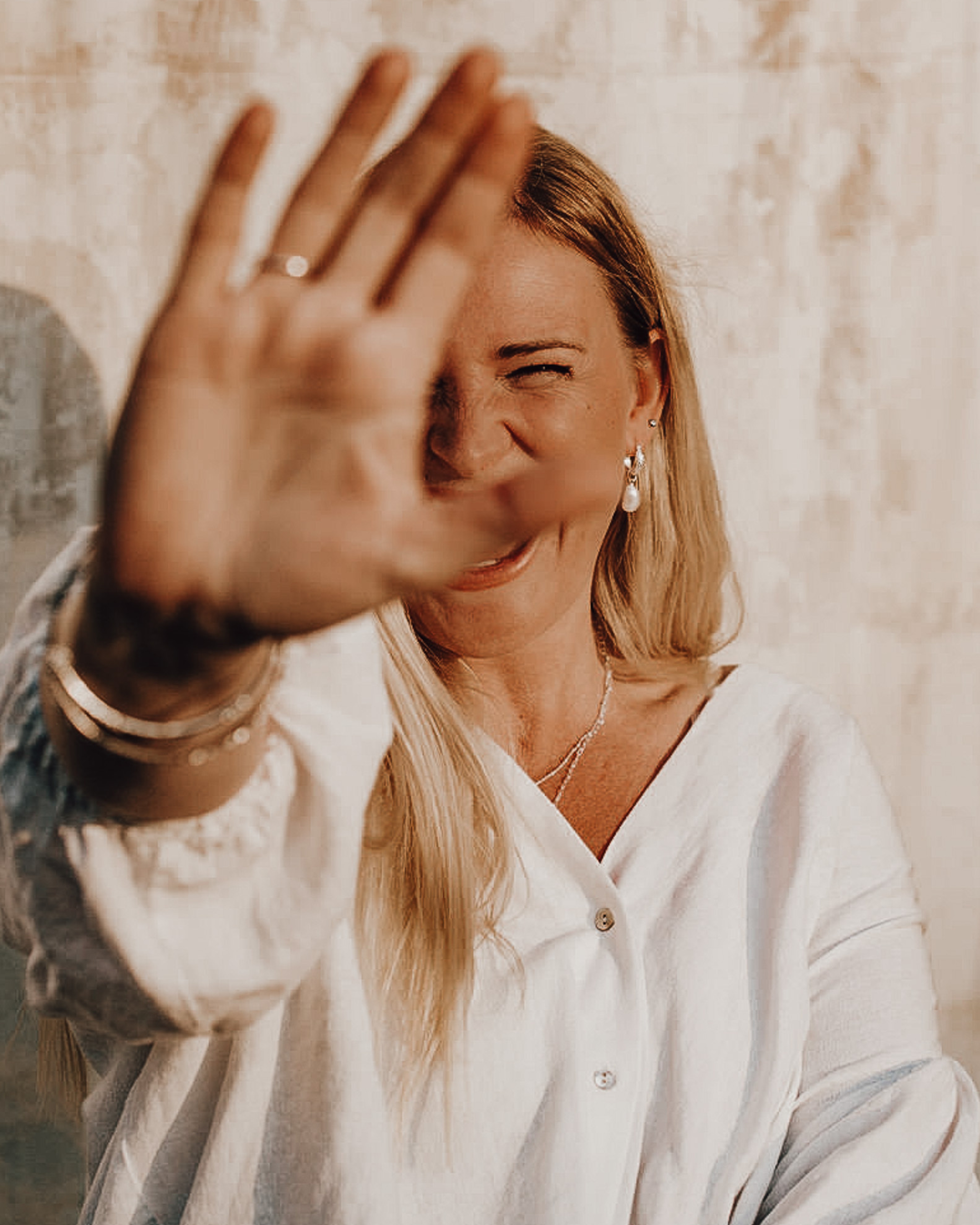
By the end of the conversation, what stays with you most is not the awards, the Vogue features or the celebrity clients, impressive though they are. It is Sammour’s understanding of what gives objects meaning in the first place.
For her, jewellery is not decoration. It is memory made physical. It is the thing someone reaches for on the days that matter most, often without fully realising why. That perspective feels inseparable from the life she lived before Dainty London existed, years spent understanding how deeply people cling to the things that remind them of love, presence and permanence.
What makes Sammour compelling is that she never speaks about reinvention as escape. Nursing was not a former life she abandoned. It remains part of the emotional architecture behind everything she creates now. The care, the precision, the refusal to compromise on what matters, all of it carried forward into a different form.
Perhaps that is why Dainty London resonates in the way it does. In an era obsessed with speed, visibility and constant reinvention, Sammour has built something slower and more considered. A brand rooted not in trend forecasting, but in memory, craftsmanship and emotional weight.
More than anything, she leaves you with the sense that success, at least for her, has very little to do with status. It is about building a life expansive enough to hold every version of yourself without apology.
You can shop Jade's brand Dainty London at www.daintylondon.com
Continue Reading
More Fashion
Cardi B And The New Luxury Economy: Why Fashion’s Biggest Names Are Turning To Resale
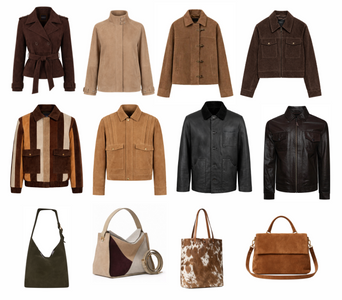
Barney's Originals understands that great leather never really goes out of style
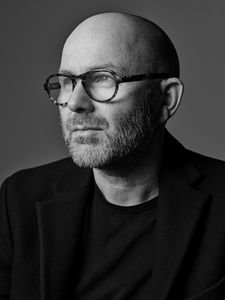
Two Photographers, One Vision Split in Two . The 2027 Pirelli Calendar Rewrites Its Own Rules
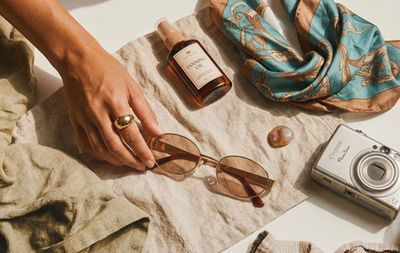
MiOwne’s Revival Collection Knows Exactly What It’s Doing

Stories worth your
weekend.
A handpicked dispatch from Hinton's editors. The long reads, the people, the openings, the things worth knowing. No filler.