Rimmel London’s Social Revival Was Not About Posting More. It Was About Playing Smarter.
Discover how Rimmel London revitalized its social presence by playing smarter, not harder. Learn how Rimmel London achieved standout success.

For legacy beauty brands, social media can be unforgiving.
Recognition alone is no longer enough. Heritage does not guarantee relevance, celebrity campaigns no longer hold the same cultural weight, and polished advertising without platform fluency can quickly feel like a relic of another era. For Rimmel London, one of Britain’s most familiar beauty names, that reality became increasingly clear as digital beauty culture shifted toward creator ecosystems, short form content, and algorithmic visibility.
Its recent comeback suggests the brand understood exactly that.
According to analysis from Kolsquare, Rimmel emerged as one of the standout performers in UK beauty’s latest social reshuffle, climbing 37 places on Instagram and 23 on TikTok over a six month period, ultimately reaching fifth and sixth respectively. More notably, it generated £49 million in Earned Media Value across both platforms.
That figure matters, but the strategy behind it matters more.
Rimmel’s resurgence was not driven by sheer volume. In fact, compared with competitors such as Space NK or BPerfect, the brand often posted less. Instead, its performance appears rooted in efficiency, understanding where content works, which creators convert, and when visibility matters most.
Over six months, Rimmel generated more than 10,000 pieces of content, 24 million engagements, and leaned heavily into short form video, but perhaps the clearest strategic indicator was creator selection. Rather than over indexing on celebrity scale or creator saturation, the brand activated predominantly micro influencers, those with enough community trust to feel authentic, but enough reach to scale.
This reflects a broader industry truth. Social commerce increasingly rewards contextual integration over overt promotion.
Rimmel appears to have recognised that beauty consumers are often more influenced by inclusion within routines than by isolated advertising. Multi brand content, tutorials, get ready with me formats, and product seeding became particularly effective because they embedded Rimmel into existing consumer behaviour rather than interrupting it.
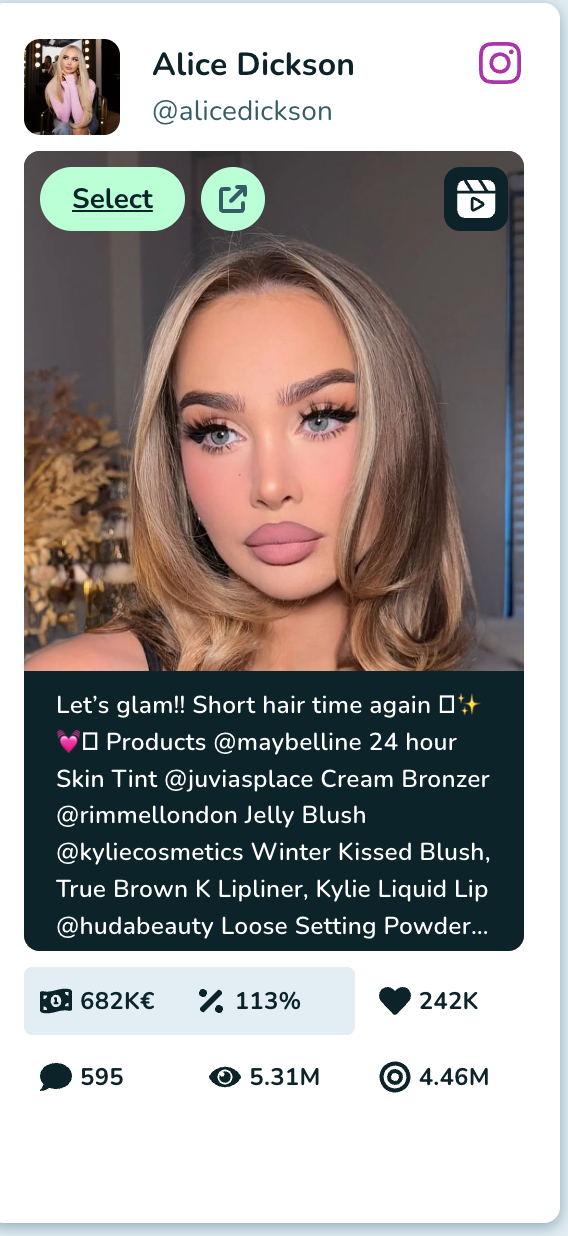
The numbers support that logic. Influencers such as Alice Dickson and Miah Carter generated significant EMV not through exclusivity, but through integration, positioning Rimmel products within wider beauty conversations where discovery feels organic rather than transactional.
Quentin Bordage, CEO and founder of Kolsquare, summarised it clearly: “ Rimmel London’s rise is particularly notable because it demonstrates that scale alone is not the only key. The brand generated substantial EMV while activating fewer creators than many of its competitors. That level of efficiency signals strong creator alignment and platform relevance .”
That final phrase, platform relevance, may be the most important.
This is where many heritage brands struggle. They often attempt to replicate old marketing logic within new ecosystems. Rimmel’s recent performance suggests it did the opposite. It adapted to platform behaviour itself, focusing on short form visibility, key commercial periods such as Black Friday, and creator relationships that aligned with audience trust rather than simply reach.
There is also a broader commercial lesson here for beauty.
Performance is increasingly shaped less by how much a brand says and more by how effectively it becomes part of what creators are already saying. In practical terms, that means product desirability, creator affinity, and timing can now outperform brute force marketing spend.
For Coty, which initiated the strategic repositioning, Rimmel’s results offer evidence that legacy brands can absolutely reclaim relevance, but only when they stop relying on recognition and start competing within the mechanics of modern influence.
In beauty’s current social economy, visibility is not enough.
Continue Reading
More Business & Finance
UK Borrowing Costs Climb To Fresh Financial Crisis Era High As Markets Lose Confidence In Political Direction

The Sunday Times Rich List Reflects a Changing Era for Wealth Creation
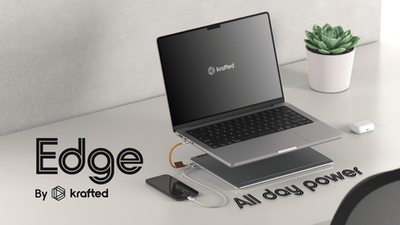
Krafted Launches Kickstarter Campaign for Edge, the World’s First Slim Laptop Power Bank with a Replaceable Ba

Wimbledon’s Biggest Winners Are Increasingly Luxury Brands, Not Just Tennis Players

Stories worth your
weekend.
A handpicked dispatch from Hinton's editors. The long reads, the people, the openings, the things worth knowing. No filler.